

In order to win against an ever more ornery deer population creeping into suburbia, one has to think like a deer. Cheesy yes, but thinking this way will help you save money on plants!
From research done for decades on how to deter deer from the landscape, we know these things:
- They don’t prefer plants with pungent aromas
- They are turned off by plants with hairy, textured, or sticky leaves
- Deer are creatures of habit, and may continue returning to places where they’ve browsed before
While no product or plant is 100% deer resistant, there are some each that you can use successfully in your landscape.
First, the products. Callers to my radio show have sworn by many things: from Irish Spring soap shavings, to mothballs** and human hair. If the hacks listed, aside from mothballs, work for you in any capacity, heck, keep doing it. <see below about the dangers of mothballs outside>. But if you’re looking for something more substantial, these commercial products have been researched and proven effective. (And I receive no compensation for the mention of any of these). Organic products like Plantskydd (with a dried blood odor), Liquid Fence (eggs and garlic), and Milorganite, a slow-release fertilizer made from sewage sludge, all have odorous repellents. When applied to the base of plants, Milorganite does deter deer in the short term, while at the same time feeding your plants… a “two-fer”! Other products I’ve heard about are Bonide granular repellents, Deer Scram, ‘Go Away! Deer & Rabbit’, and Repels-All.
Then there are physical barriers, like fencing. But in order to be effective in keeping deer out, fencing would have to be at least 6-8′ high. This may not be practical for your landscape.
Now to plants. We can still get beautiful color and joy by planting the things we want… just consider the plants that deer don’t like. Again, due to smell, texture, or some other reason, these plants are recommended by the UGA Extension Service.
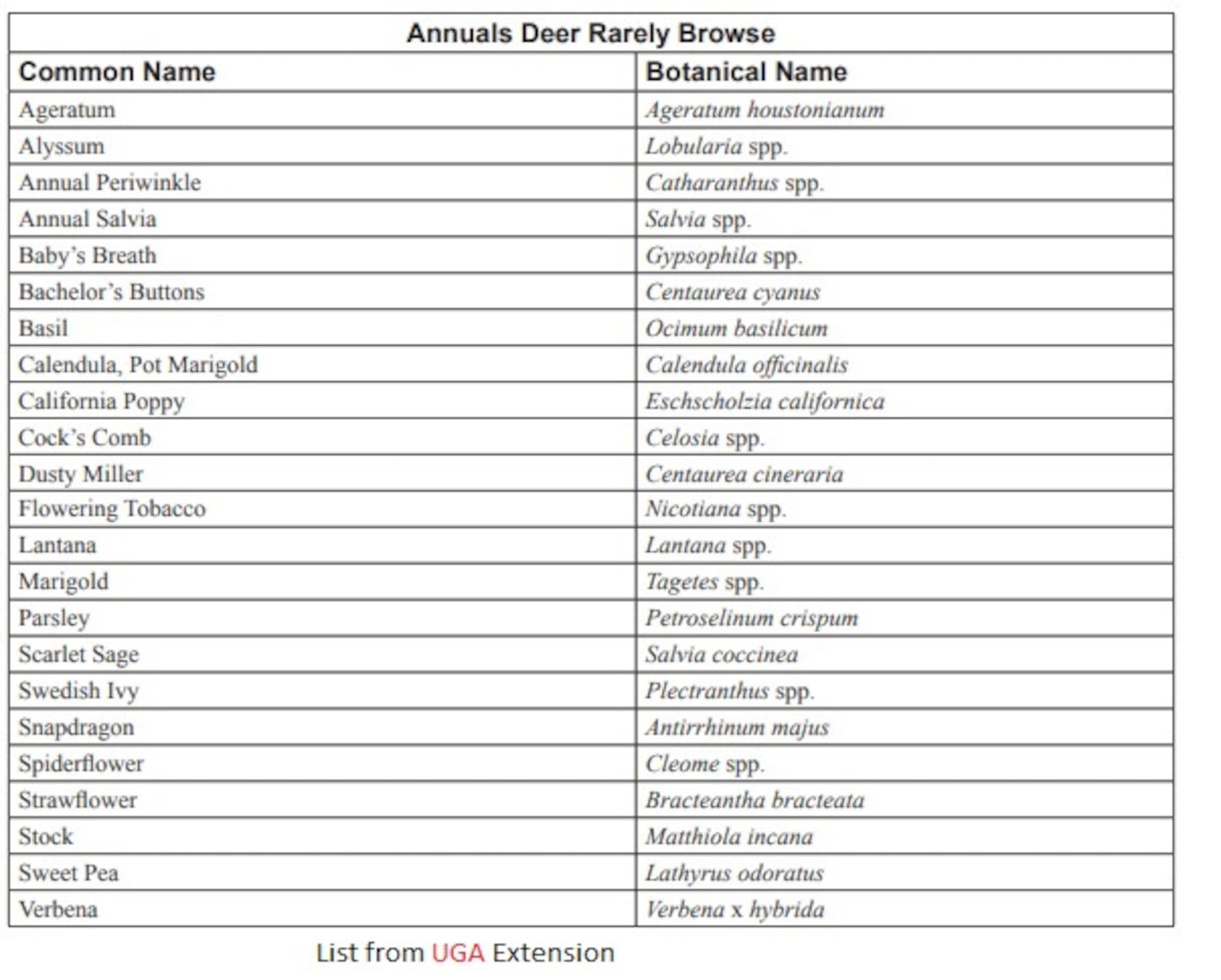
While this is not an exhaustive list, it’s a start. Listeners have also mentioned that deer stay away from their hellebores, zinnias, verbena, ornamental grasses, and irises. And finally, the option of planting things in containers, closer to the house, giving you more control.
And the Alabama Cooperative Extension explains why and how certain products are effective here.
**It is illegal to use mothballs outside, so refrain from using them in the garden and landscape. (Updated 5-3-22). For more, please visit the National Pesticide Information Center at http://npic.orst.edu/
©2022 Cox Media Group