

ATLANTA — Georgia Power crews are working to restore electricity as the ice storm continues to cause widespread outages across the state.
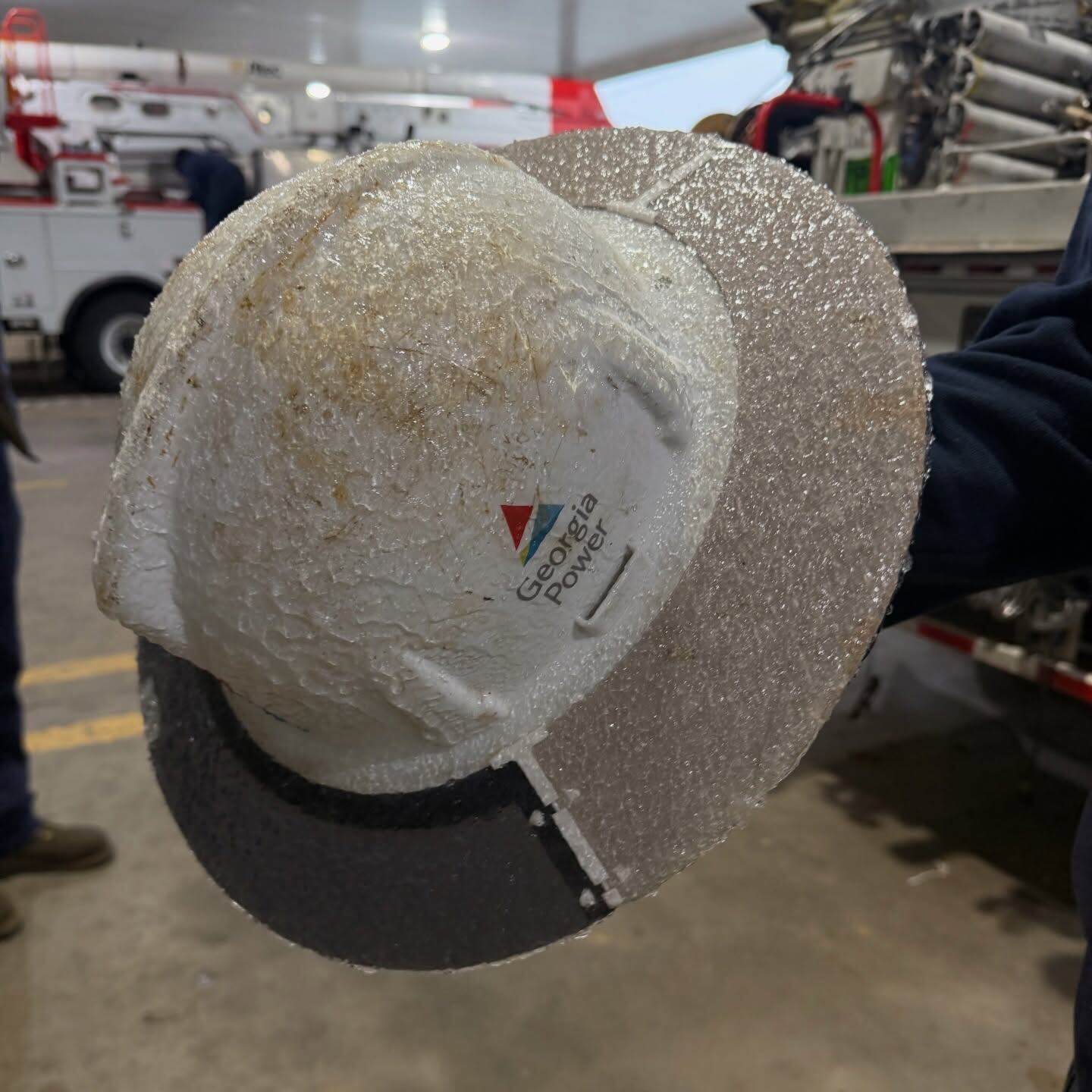
More than 17,000 customers are without power as crews respond to hazardous conditions. Georgia Power shared a photo on X showing a hard hat covered in ice from a crew member working in Alpharetta, highlighting the challenging conditions crews are facing.
Georgia Power spokesman Matthew Kent said crews are responding not only in north Georgia, but across the metro Atlanta area as well. Atlanta has seen several outages, with most linked to downed trees falling onto power lines.
Fulton County currently has the highest number of Georgia Power outages in the metro area, affecting more than 3,000 customers. About 2,000 customers are also without power in DeKalb County.
Georgia Power reports more than 16,000 power outages statewide, while Georgia EMC reports nearly 17,000 outages, with a large number occurring in northeast Georgia.
For customers without electricity, Kent says Georgia Power’s outage map is the best way to get updates.
“The best thing that we have for customers is the outage map,” Kent said. “If you go to georgiapower.com/storm, you can access that outage map and see where outages are occurring and if it’s in your area you can see an estimated restoration time of when you might be able to get power back.”
Kent said crews will be deployed to restore service as soon as it is safe to do so.
UPDATE (Sunday afternoon): Power outages have continued to climb across parts of metro Atlanta. Fulton County now has the largest number of affected customers in the metro area, with just over 20,000 people without power. Gwinnett County reported close to 15,000 outages, while DeKalb County had around 7,000 customers without electricity.
Kent said restoration efforts can take time, especially when damage involves downed power poles. He said replacing a power pole typically takes about four to six hours and requires multiple steps before service can be safely restored. He also urged residents not to touch downed power lines, warning they could still be live and dangerous.
Kent noted that even if residents do not see crews working directly on their street, crews may be nearby preparing equipment, including replacement poles, needed to restore power.
Several state agencies and local county governments are also assisting with storm response by removing trees and branches impacting power lines. During a Sunday afternoon press briefing, the Georgia Emergency Management Agency said approximately 100,000 power outages were reported statewide.