
There are some model stratosphere rumblings for a return to colder after the big warm-up but because of the distance off I consider it just data noise for now.
While we get severe weather at times in the late autumn and winter the prime season here and in most of the country is Spring.
The Pacific is still in a -PDO phase which favors increased severe weather in the Spring and early Summer in parts of the U.S.
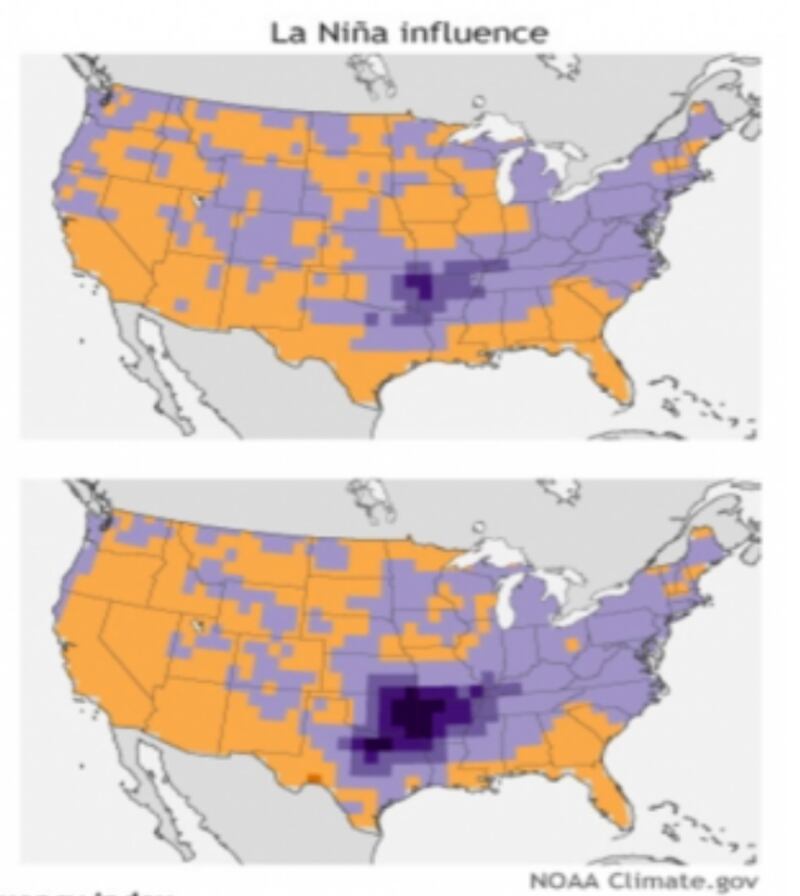
We are still in a La Nina in the Pacific although the atmosphere has not behaved much like a typical one most of the winter.
La Nina seasons often see an increase in severe weather above-normal especially just to the North and West of Atlanta with the max influence in frequency in the ArkLaTx region straddling the Mississippi River. Top panel is tornadoes and bottom panel is hailstorms March-April-May:
Current projections indicate the La Nina will continue but weaken slowly some in the months ahead:

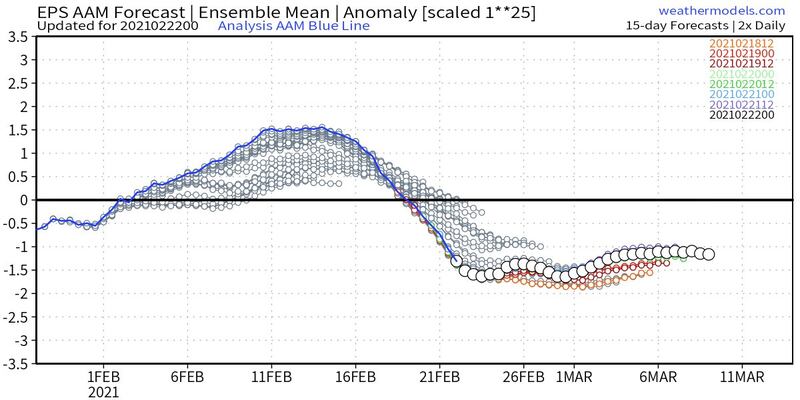
Models are showing changes in the MJO Madden Julian Oscillation and monitoring of the GWO Global Wind Oscillation and GLAAM Global Angular Atmospheric Momentum suggest a coming uptick in severe weather risk starting primarily as usual to our West in traditional Spring Tornado season areas mainly South:
Using GEFS and CFS model derived analogs:


For daily weather info follow my on Twitter @MellishMeterWSB.
Cox Media Group