

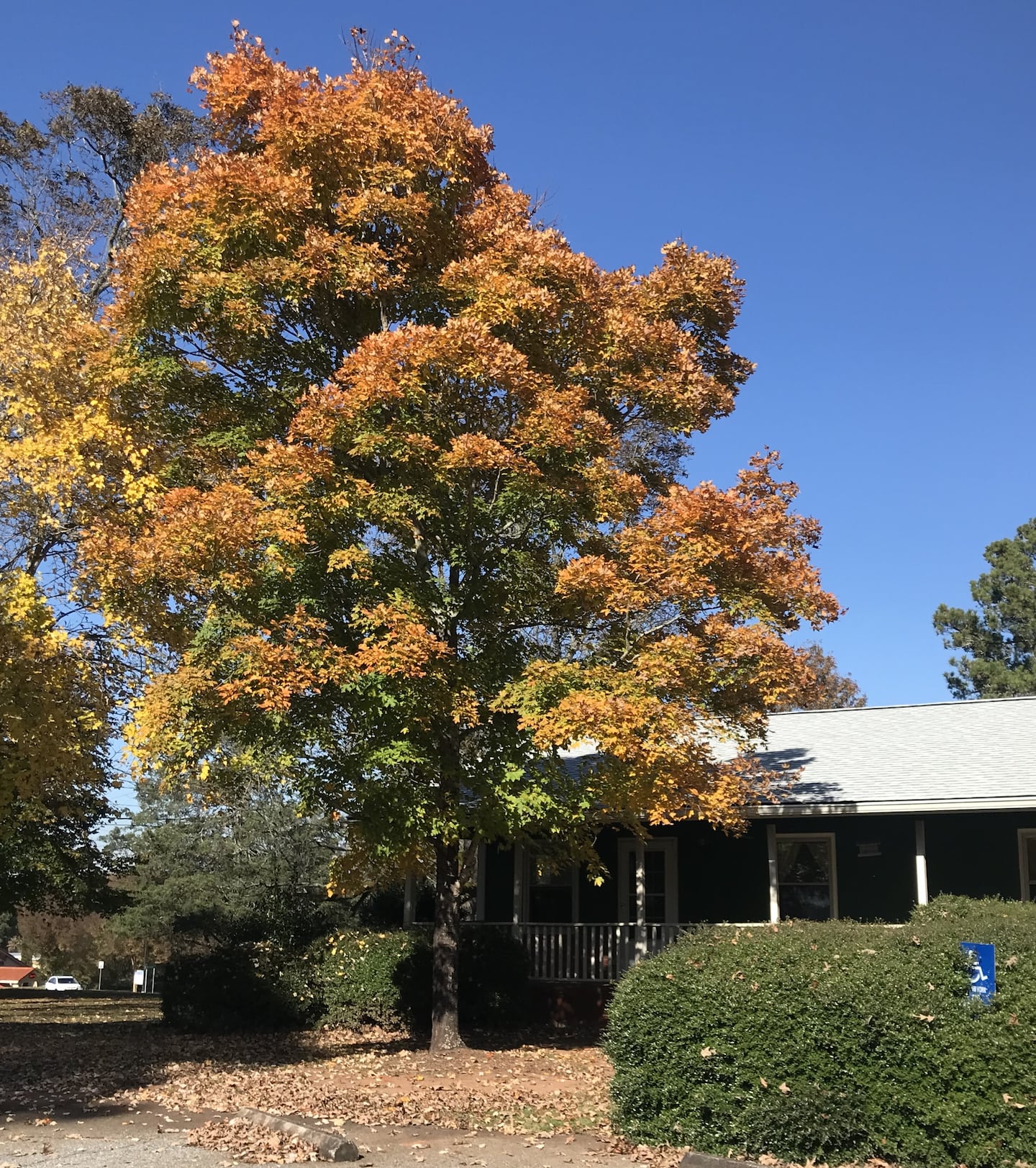
For those new to the South, welcome! Two things about fall, well, three actually. The fall leaf change is amazing here- it’s a must see. Two, this is the season for all things football, so pick a team and stick by them. Lastly, with cooler nights and sunny days, fall is the perfect time to plant trees and shrubs! That gardening tidbit is worth mentioning again. Whether you’re looking to plant new trees, bushes, or maybe transplant them from one place to another, this is the window to do it to achieve the best results.
Homeowners decide to dedicate space in the landscape to a tree, or to many new trees, for a number of reasons: providing privacy, filling a void, attracting wildlife, replacing another tree or for adding interest or a focal point.
I’ve been lucky in my short time hosting Green and Growing to be able to lean on the Georgia Forestry Commission for the knowledge and expertise of the state’s foresters. Ramping up to the autumn leaf change, Seth Hawkins, who is a Program Coordinator for GFC, joins my show every Saturday in October to give updates on where fall color is most noticeable in the northern reaches of Georgia. Gathered from conversations with Seth and from resources by University of Georgia Extension, here are some trees to consider to bring that Georgia mountain color right to the landscape!
One can’t go wrong with most varieties of maples! Among the most striking are the yellow leaves of the Coral Bark maple. And when it drops its leaves, there’s the added bonus of its unique red bark. Displaying attractive, scarlet-colored leaves in fall is the Bloodgood Japanese maple.
Sourwood tree is an ‘early-turner’ during the seasonal transition and is noticeable as its leaves turn from green to red and purple. Dogwoods, a great understory tree, turn color similarly at this time.
River birch trees can be messy, but their multi-trunk form and their paper-like bark make them stand out year-round. In the fall, their leaves are a showy, bright yellow.
Finally, redbuds are some of my favorites! They can be planted as a smaller specimen tree. The Eastern redbud grows small, purple flowers along the branches in early spring, retains its heart-shaped leaves throughout the summer, and then the leaves transition from deep green to yellow, come fall. Then there’s the Rising Sun redbud, which is a great ornamental tree. As it fades to fall, the branches show off multiple colors all at once. The dark green, to pale green, to yellow, to bronze orange succession of leaves almost looks like an optical illusion.
These are just a handful of the many trees that exhibit great autumn color, and they are all native trees to Georgia! Native trees are those that thrive in both our soil and climate. They also provide food, habitat and are of ecological importance to our insects and wildlife.
To see Georgia Forestry Commission’s weekly Leaf Watch Reports during October, visit their website: www.gatrees.org
©2022 Cox Media Group