
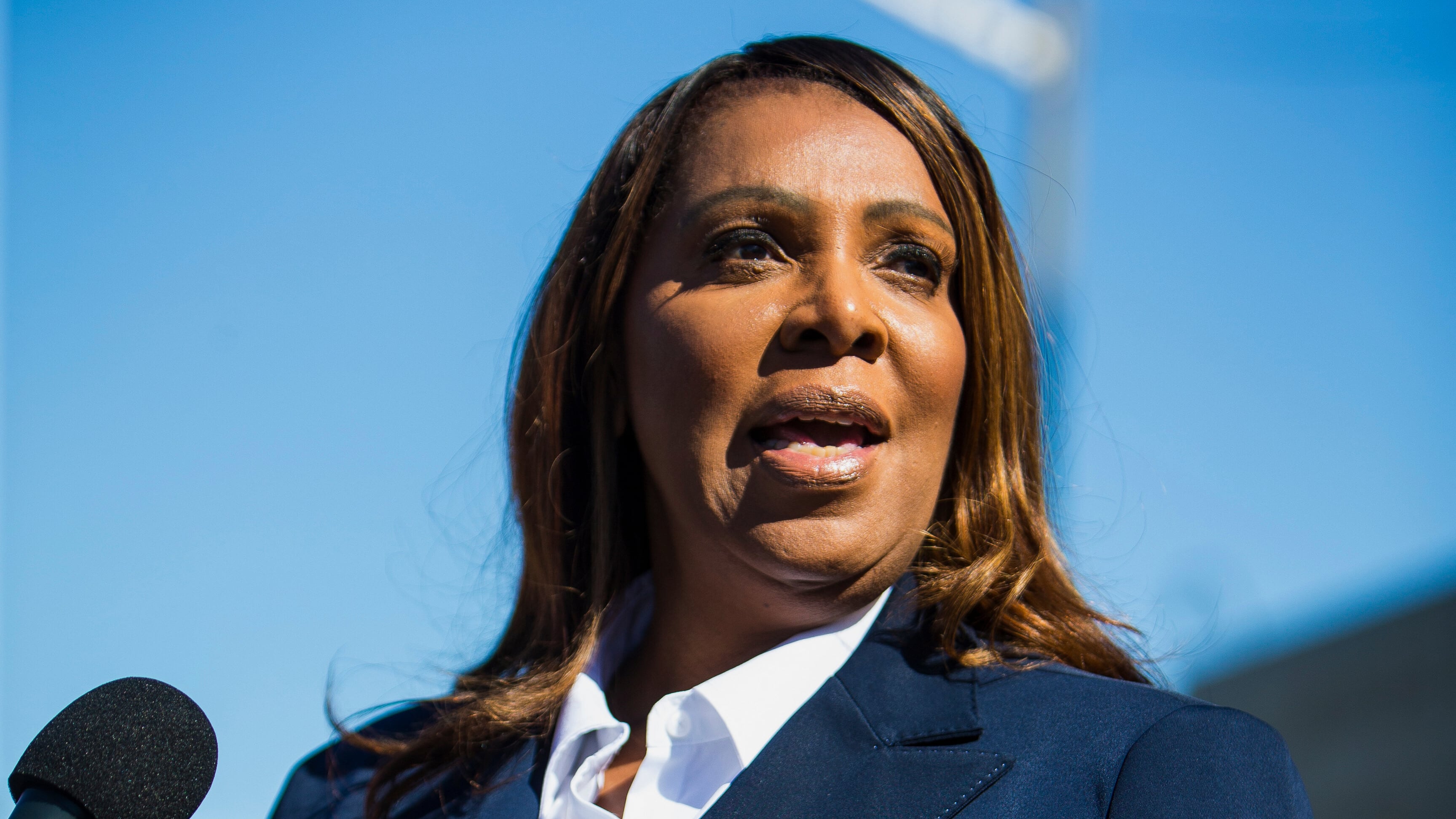
ALEXANDRIA, Va. — A grand jury declined for a second time to re-indict New York Attorney General Letitia James on Thursday, refusing to resurrect a mortgage fraud prosecution encouraged by President Donald Trump, according to a person familiar with the matter.
It's another major blow to the Justice Department after the dismissal of earlier charges against James and another longtime Trump foe, former FBI Director James Comey, in a stunning rebuke of the Trump administration's efforts to prosecute the president's political opponents.
A judge threw out the original indictments against James and Comey in November, ruling that the prosecutor who presented to the grand jury, Lindsey Halligan, was illegally appointed U.S. attorney for the Eastern District of Virginia.
The Justice Department asked a grand jury in Alexandria, Virginia, to return an indictment Thursday after a different grand jury in Norfolk last week refused to do so. The person who confirmed the failure to secure an indictment was not authorized to publicly discuss the matter and spoke on the condition of anonymity.
The allegations related to James’ purchase of modest house in Norfolk, where she has family.
James says the case is politically motivated and has denied any wrongdoing.
James, a Democrat who infuriated Trump after his first term with a lawsuit alleging that he built his business empire on lies about his wealth, was initially charged with bank fraud and making false statements to a financial institution in connection with a home purchase in 2020.
During the sale, she signed a standard document called a “second home rider” in which she agreed to keep the property primarily for her “personal use and enjoyment for at least one year,” unless the lender agreed otherwise. Rather than using the home as a second residence, prosecutors say James rented it out to a family of three, allowing her to obtain favorable loan terms not available for investment properties.
The cases against James and a separate prosecution of Comey have heightened concerns that the Trump administration is using its law enforcement powers to pursue the president's enemies.
Both cases were brought shortly after the administration installed Halligan, a former Trump lawyer with no prior prosecutorial experience, as U.S. attorney amid public calls from the president to take action against his political opponents.
But U.S. District Judge Cameron McGowan Currie threw out the cases last month over the unconventional mechanism that the Trump administration employed to appoint Halligan. The judge dismissed them without prejudice, allowing the Justice Department to try to file the charges again.
Halligan had been named as a replacement for Erik Siebert, a veteran prosecutor in the office and interim U.S. attorney who resigned in September amid Trump administration pressure to file charges against both Comey and James. He stepped aside after Trump told reporters he wanted Siebert "out."
James’ lawyers separately argued the case was a vindictive prosecution brought to punish the Trump critic who spent years investigating and suing the Republican president and won a staggering judgment in a lawsuit alleging he defrauded banks by overstating the value of his real estate holdings on financial statements. The fine was later tossed out by a higher court, but both sides are appealing.
After the Norfolk grand jury rejected a new indictment last week, James’ lawyer said, “This should be the end of the case.”
“If they continue, undeterred by a court ruling and a grand jury’s rejection of the charges, it will be a shocking assault on the rule of law and a devastating blow to the integrity of our justice system,” defense attorney Abbe Lowell said at the time.
Comey was separately charged with lying to Congress in 2020. Another federal judge has complicated the Justice Department’s efforts to seek a new indictment against Comey, temporarily barring prosecutors from accessing computer files belonging to Daniel Richman, a close Comey friend and Columbia University law professor whom prosecutors see as a central player in any potential case against the former FBI director.
Prosecutors moved Tuesday to quash that order, calling Richman's request for the return of his files a "strategic tool to obstruct the investigation and potential prosecution." They said the judge had overstepped her bounds by ordering Richman's property returned to him and said the ruling had impeded their ability to proceed with a case against Comey.
_____
Richer reported from Washington.
Copyright 2025 The Associated Press. All rights reserved. This material may not be published, broadcast, rewritten or redistributed without permission.





 Sign Up