

Last week, the National Weather Service in Peachtree City declared the drought that developed throughout the state of Georgia as “officially over”.
According to the latest Drought Information Statement released on August 6, “the conditions have dropped below D2 Severe Drought, officially concluding this drought event across north and central Georgia (the NWS Atlanta forecast area).

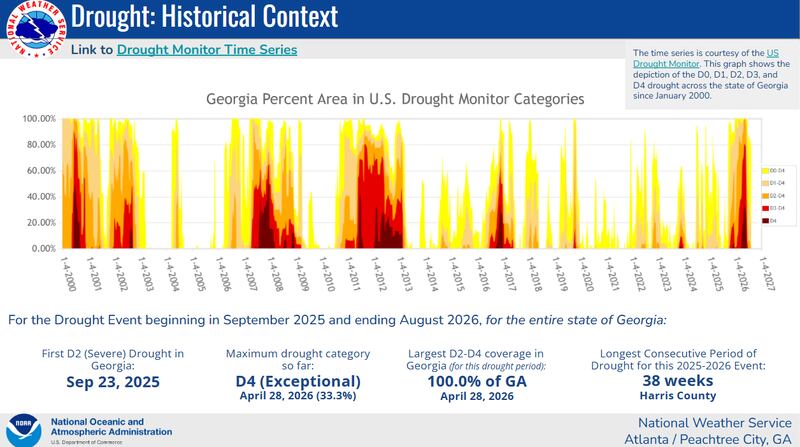
“The drought period began in late September 2025 and reached its peak in April, when it encompassed 100% of Georgia for the first time in the history of the U.S. Drought Monitor.”
Additional information from the National Weather Service:
- Began: September 23, 2025,
- End: August 6, 2026,
- Peak: April 2026
- Highest Intensity: D4 (Exceptional Drought) covered 33% of the state in April 2026
- County with the Longest Consecutive Period of at least D2 conditions: Harris County (38 weeks). Least? Baldwin (6 consecutive weeks)
- Average Time in Drought: On average, most counties were in D2 or worse conditions for 25 weeks.
Looking Back to Spring 2026
The drought began during the late fall and winter months of 2025 and continued into the spring.
During the month of March, afternoon temperatures climbed 10 to 20 degrees above average, and nearly three weeks passed with little to no rainfall.


The drought continued to worsen in April as rainfall remained meager.

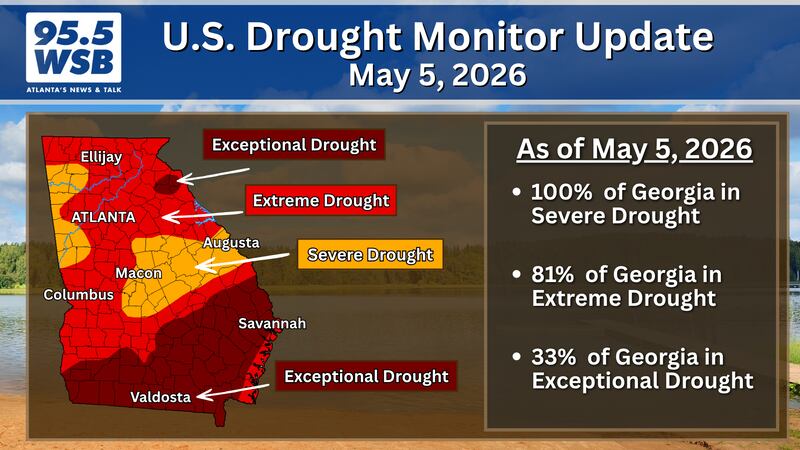
Drought conditions peaked in late April to early May with Extreme to Exceptional Drought conditions developing in Metro Atlanta as well as northeast Georgia.

Pop Up Summer Storms to the Rescue
However, by late May, the precipitation pattern flipped.
The Athens area received nearly 3 inches of rain in one day in late May, boosting the monthly rainfall totals for the area.

Near-daily rainfall continued in July, with some of the afternoon thunderstorms providing locally heavy downpours that led to areas of flash flooding. The Atlanta Airport registered a rainfall surplus of 1.39 inches for the month.

Looking Ahead to Fall
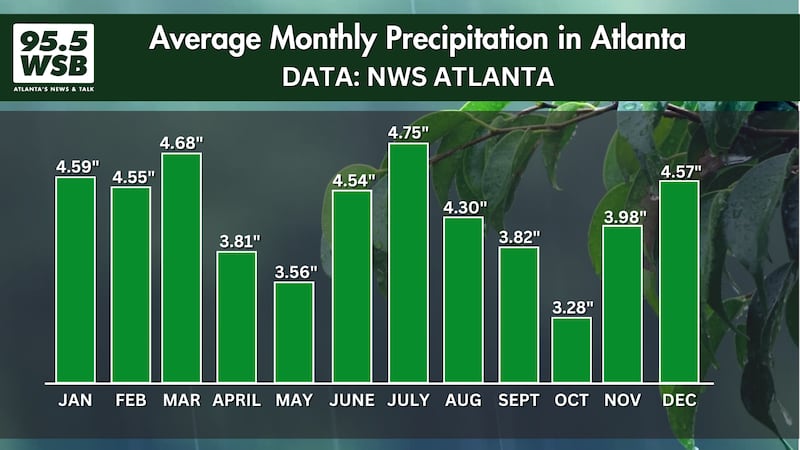
On average, Fall is the driest season for North Georgia, including Metro Atlanta. As daily pop up afternoon rain showers give way to cooler, drier conditions this Autumn, it remains to be seen if the drought conditions return to the region.
Share Your Rainfall Reports with Me!
Facebook: Christina Edwards WSB
Instagram: ChristinaWSBwx
Twitter: @ChristinaWSBwx
©2026 Cox Media Group